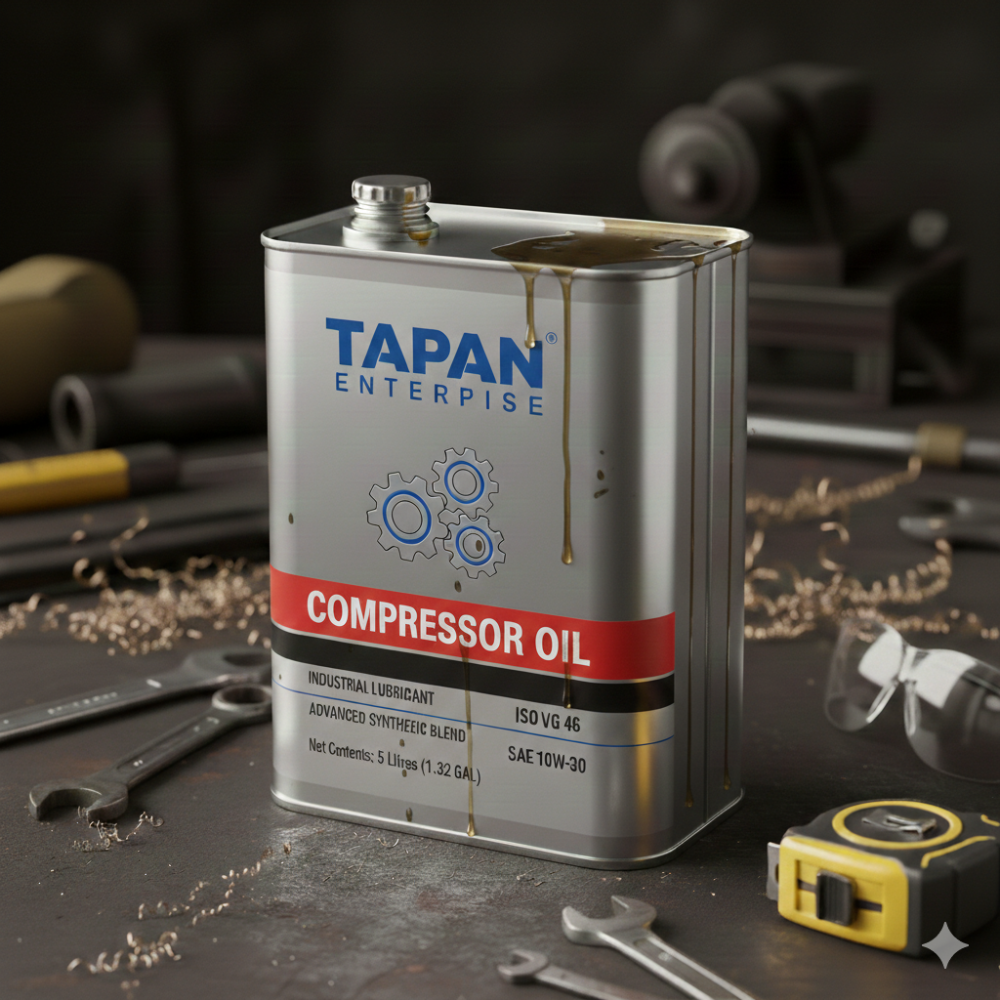
Description
Key Features
-
Thermal & Oxidative Stability: This is the most critical feature. It prevents the oil from breaking down, forming sludge, or creating carbon deposits when subjected to the high-temperature environment of a compressor’s compression chamber or discharge valves.
-
Optimal Viscosity (ISO VG): Compressor oils are available in specific viscosity grades (e.g., ISO 100, 150, 220). Maintaining the correct viscosity ensures the oil doesn’t thin out too much at high heat, which would lead to metal-to-metal wear, or become too thick at cold start-up.
-
Anti-Wear & Extreme Pressure (EP) Protection: Contains specialized additives that prevent wear on piston rings, cylinder walls, and rotary screw rotors, effectively extending the mechanical lifespan of the compressor.
-
Corrosion & Rust Inhibition: Compressors naturally generate moisture during operation. Effective compressor oils contain inhibitors that neutralize this water and create a protective barrier on internal metallic surfaces to prevent rust.
-
Low Foaming Tendency: Air compressors often agitate the oil. Anti-foaming additives allow air bubbles to dissipate rapidly, which is essential to prevent cavitation and ensure the oil maintains steady pressure and lubrication.
-
Water Separability (Demulsibility): High-quality oils allow water to separate easily. This prevents the oil from forming a milky emulsion, which would compromise the oil’s lubricating film strength.